


Pepeha of Practice
Hey, I'm Andrew
This is the story of the tools, people, places, and worlds
that shaped my practice.
Pepeha of Practice
This is the story of the tools, people, places, and worlds
that shaped my practice.
I was born on December 9th, 2007, in Palmerston North. My mum is a primary school teacher, and my dad was a doctor. Before I was born, Dad was diagnosed with Multiple Sclerosis, and soon after I was born, he lost his ability to walk.
Don't worry, this is very pertinent and will come together in about seventeen years.
I was fortunate enough to grow up with parents who were massive sci-fi nerds, especially when it came to Star Trek and Doctor Who. My mum also loved playing video games. Her favourites were classics like Doom, Wolfenstein 3D, and the original Call of Duty. She stopped playing most of them when six-month-old me started taking an interest.
Fortunately, there was one game she could keep playing. That game was Star Trek: Voyager, Elite Force, a 2000 game based on the then-currently airing Star Trek: Voyager. In simple terms, you play as a member of Voyager's Hazard Team and try to save the ship from being destroyed.
The reason this game stuck with me was twofold. First, it was the first video game impressionable six-month-old me ever played. Yes, I was sitting on Mum's knee while she played it, but that's not the point. Second, the game made heavy use of a classic Star Trek idea: the forcefield.
A forcefield is a wall you can see through but cannot walk through. In Elite Force, forcefields were used everywhere. They let you see areas that felt bigger than what the game could actually let you explore. A high-end gaming PC in 2000 might have had around 250 MB of RAM, not 250 GB, so the game had to imply scale rather than fully build it.
"I wonder what is behind there."
I can't remember exactly when my first cohesive thought formed, but when it did, I think it was that one.
That was where developer Andrew started.
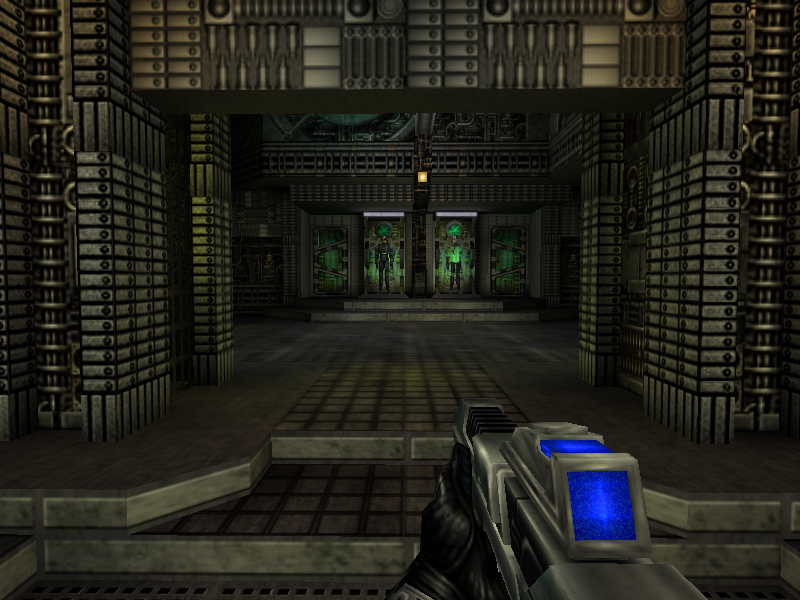
Star Trek: Voyager - Elite Force, 2000
A few years later, I got sick. Really sick.
From around the age of seven to fourteen, I spent large parts of my life dealing with debilitating health issues. For most of that time, we did not know what was wrong. All we knew was that it kept knocking me out of school for weeks at a time.
We later learned that I had severe abdominal migraines, along with a few other things.
For those years of not knowing what was wrong, or how to fix it, there was not much to do except feel sick. After the first few times, you quickly discover there is only so much YouTube you can watch before you need something else.
Around that time, I got an Xbox. The first game I played on it was Fallout 4.
Yes, it is a post-apocalyptic role-playing game, but the most important thing to me was that it had base-building and settlement systems. Naturally, I spent hours building bases, recruiting settlers, and role-playing different situations.
Eventually, the items the game allowed me to build with were not enough. So I started downloading mods. Soon after that, the mods I wanted did not exist, so I started making small Fallout 4 mods myself.
At first, they were simple things: new locations to build in, new assets, small changes that let me make the world feel more like mine. Then I discovered the world of DLC-sized story mods and the teams behind them.
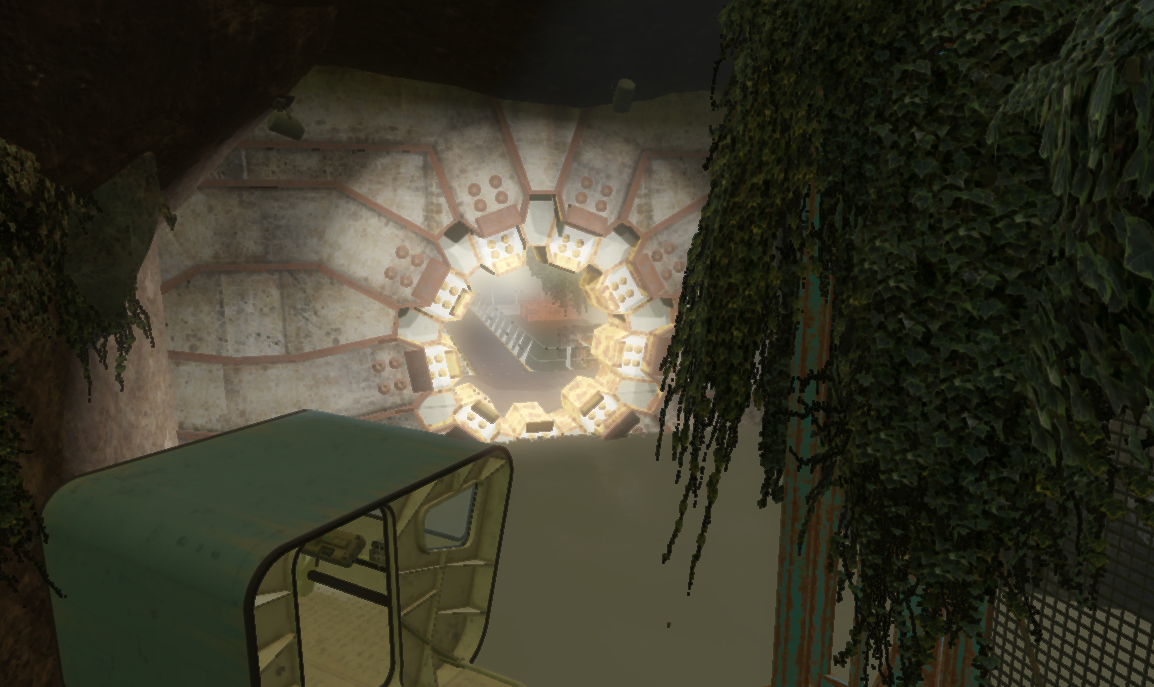
A Fallout 4 level I created as a Level Design Lead
I joined small mod teams that were working on new stories and expansions for Fallout 4. Over time, I rose through the ranks and became Department Lead of Level Design and Environment Design, and eventually Co-Project Lead.
"New locations. New assets. Small changes that let me make the world feel more like mine."
It was also around this time that I branched out from modding into actual game development. I learned and became proficient in multiple engines, including a small engine called CopperCube 4, and another one called Unity.
Yucky.
But there was one engine that really spoke to me. Almost like it was calling me towards it.
That engine was Unreal Engine 4.
Around the time I started high school, I also discovered music. I began learning tenor saxophone and bass trombone. Soon, I stopped playing bass trombone and moved to what I like to call my spirit instrument: the BBb tuba.
I love the tuba because it takes me places. Before music, I had barely left Palmy except to come to Wellington.
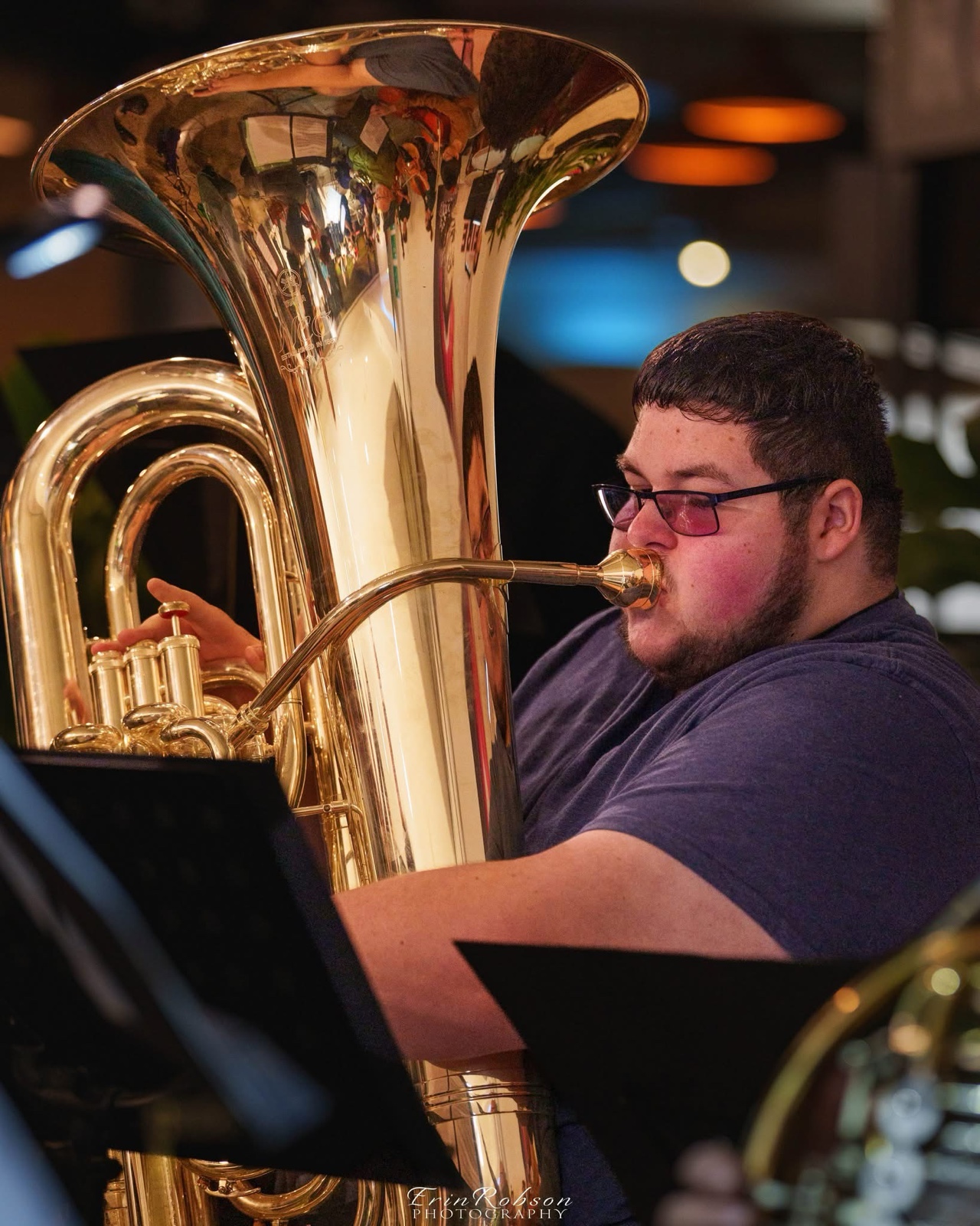
Me playing with the Manawatu Youth Orchestra on Star Wars Day 2026
Playing in the Palmerston North Brass Band has taken me to competitions in Hastings, New Plymouth, Hāwera, and Wellington. I was also selected for the 2024 and 2025 National Secondary Schools' Brass Band, which gave me the chance to spend a week in Nelson and Wellington.
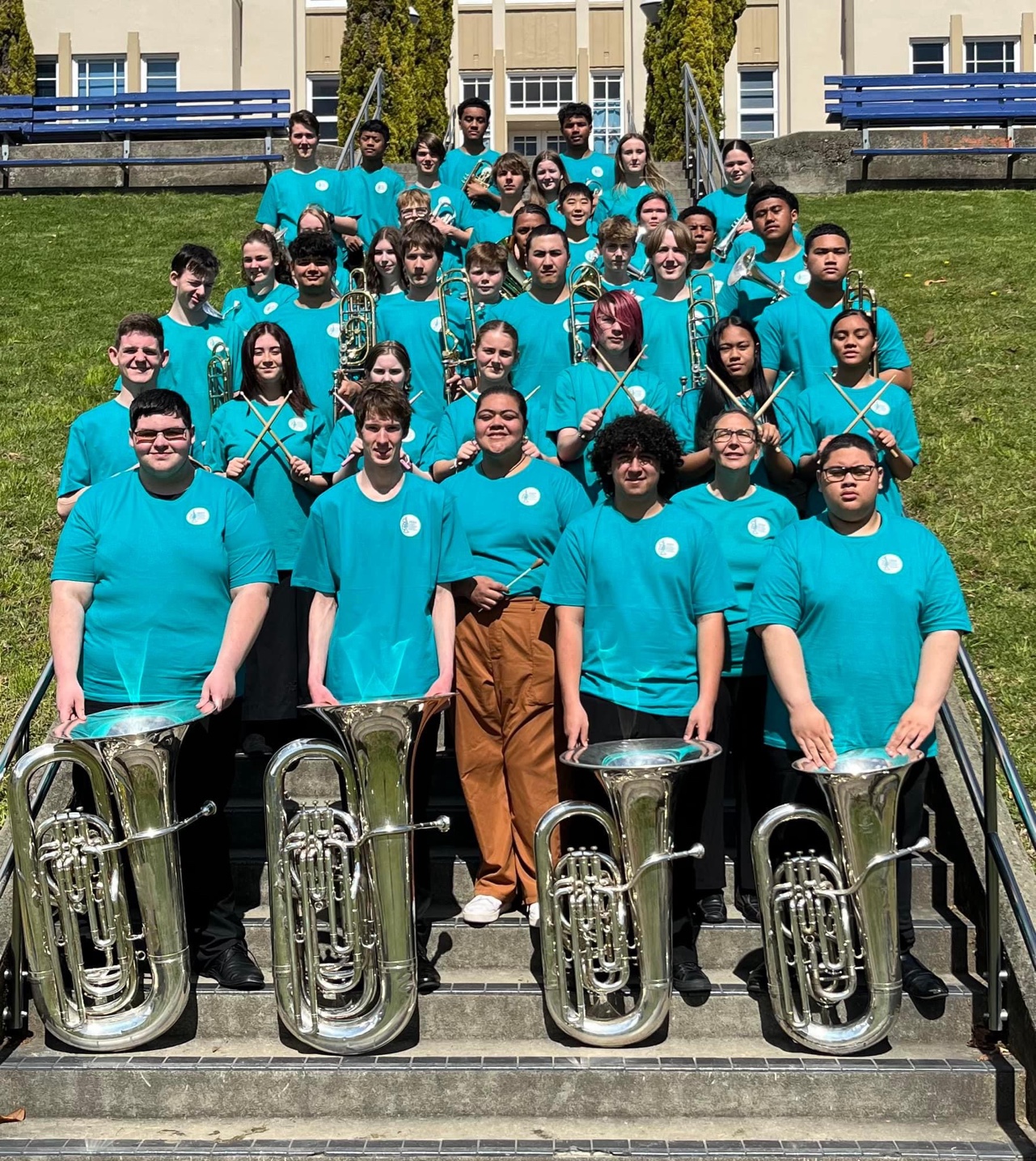
National Secondary Schools' Development Band, 2024 - Nelson
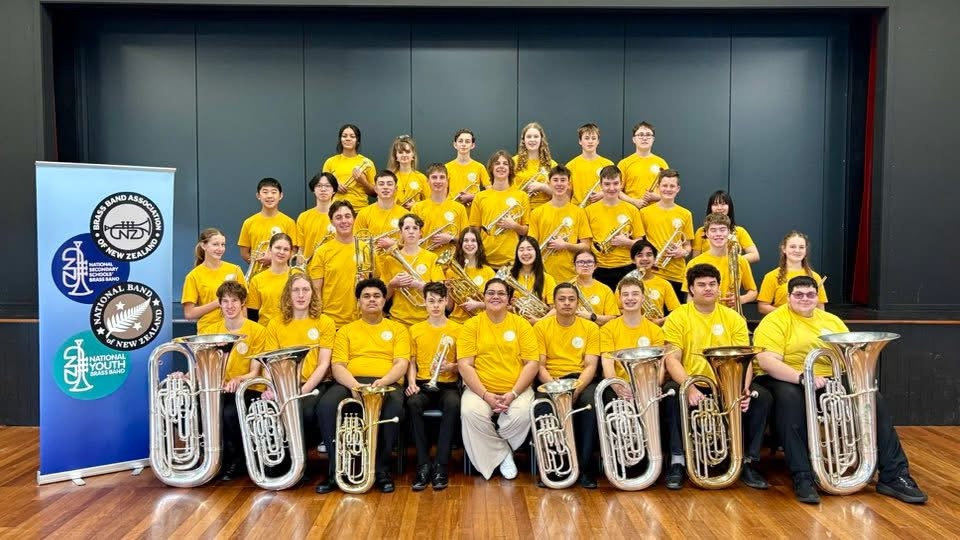
National Secondary Schools' Main Band, 2025 - Wellington
Music has become a huge part of my life. I went from not having a musical bone in my body to playing seven instruments. Music has introduced me to some lifelong friends.
But this time was not all sunshine and rainbows.
A few years later, I went through a rough patch in my life and in game development. I had quit the Fallout modding scene because it had become too toxic. Other teams, mainly bigger teams and their leads, had superiority complexes and took every opportunity to tear down the work of smaller teams, including mine.
Then, to rub salt in the wound, when I was sixteen, my dad died from MS-related complications.
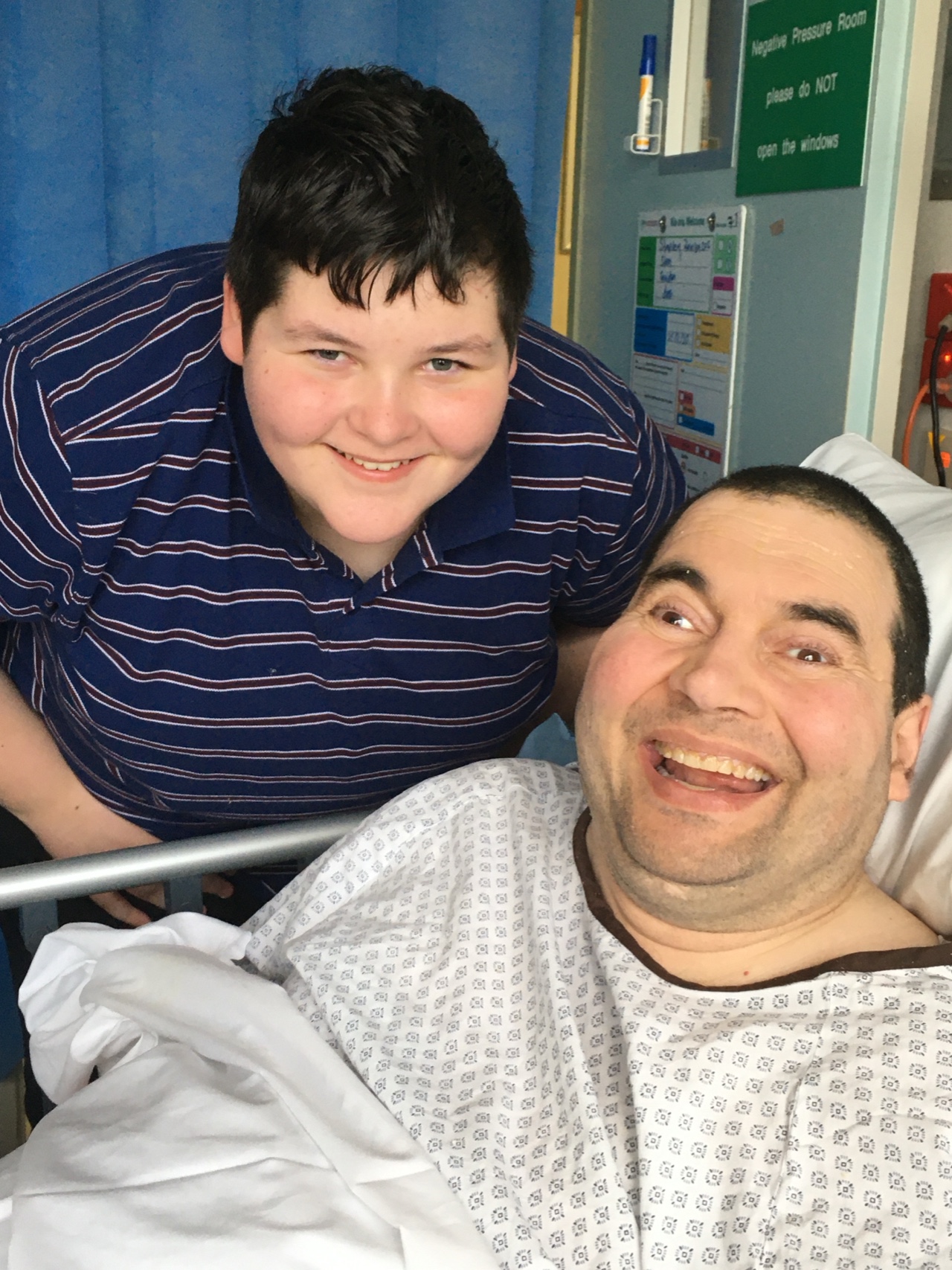
A memory with Dad
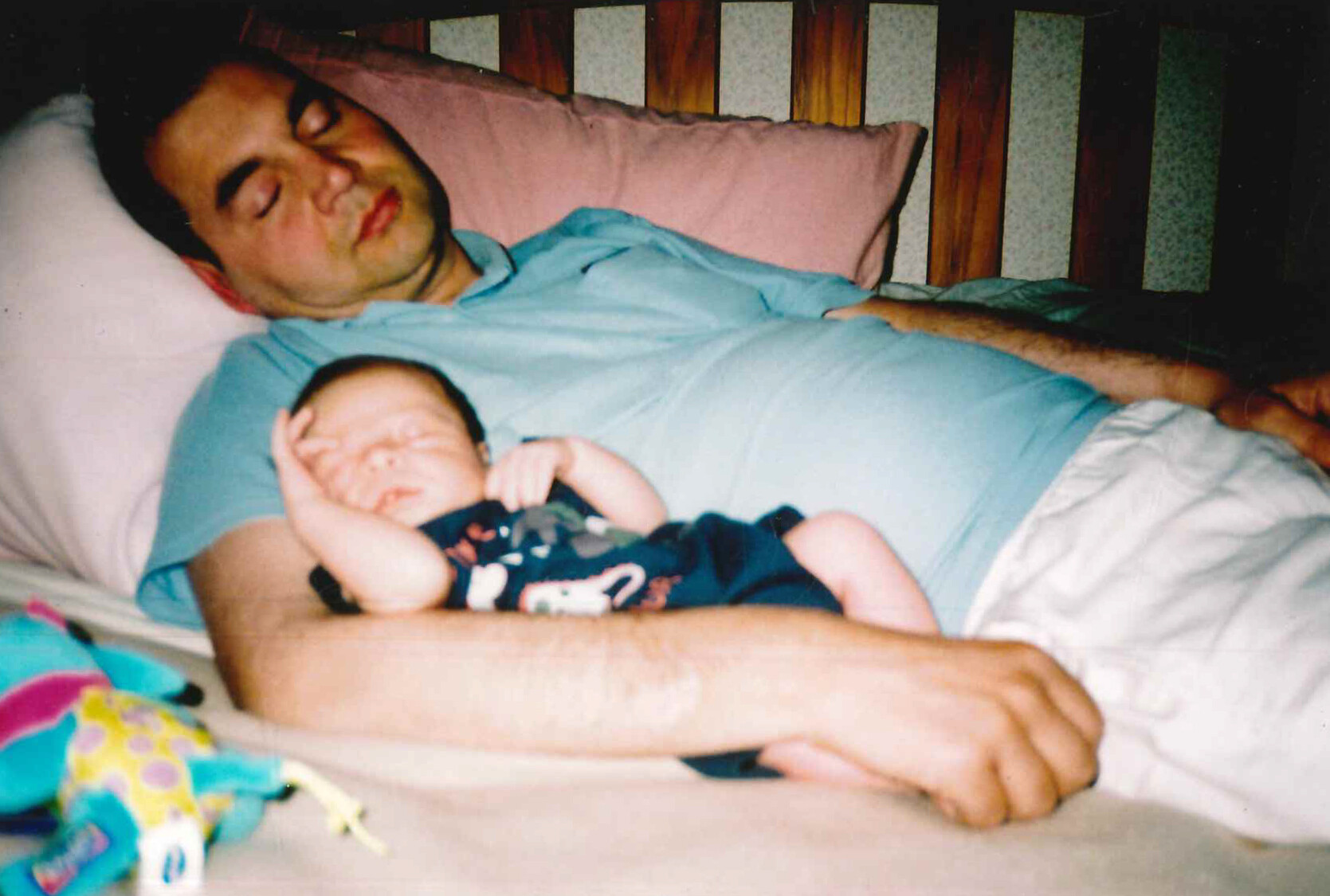
Dad holding baby me
I was not close to my dad in the way some people are close to their fathers, but I was still very close to him. He was reliable. Because he had MS and was bed-bound, he was always there when I was sick. When I was stuck at home, he was there too, usually annoying me by yelling for me to get him the TV remote or something to drink.
But he was there.
I felt alone. I had just lost my passion and my drive. I felt empty, like a fraud, or like my work was not good enough. Then Dad, who had always been the one constant in my life, was gone.
For the next two years, I gave up on games. I did not stop working in engines completely, but the projects were small things to mess around with. My creative passion did not disappear, but it became directionless. My love for modding was gone. The drive to make games was gone.
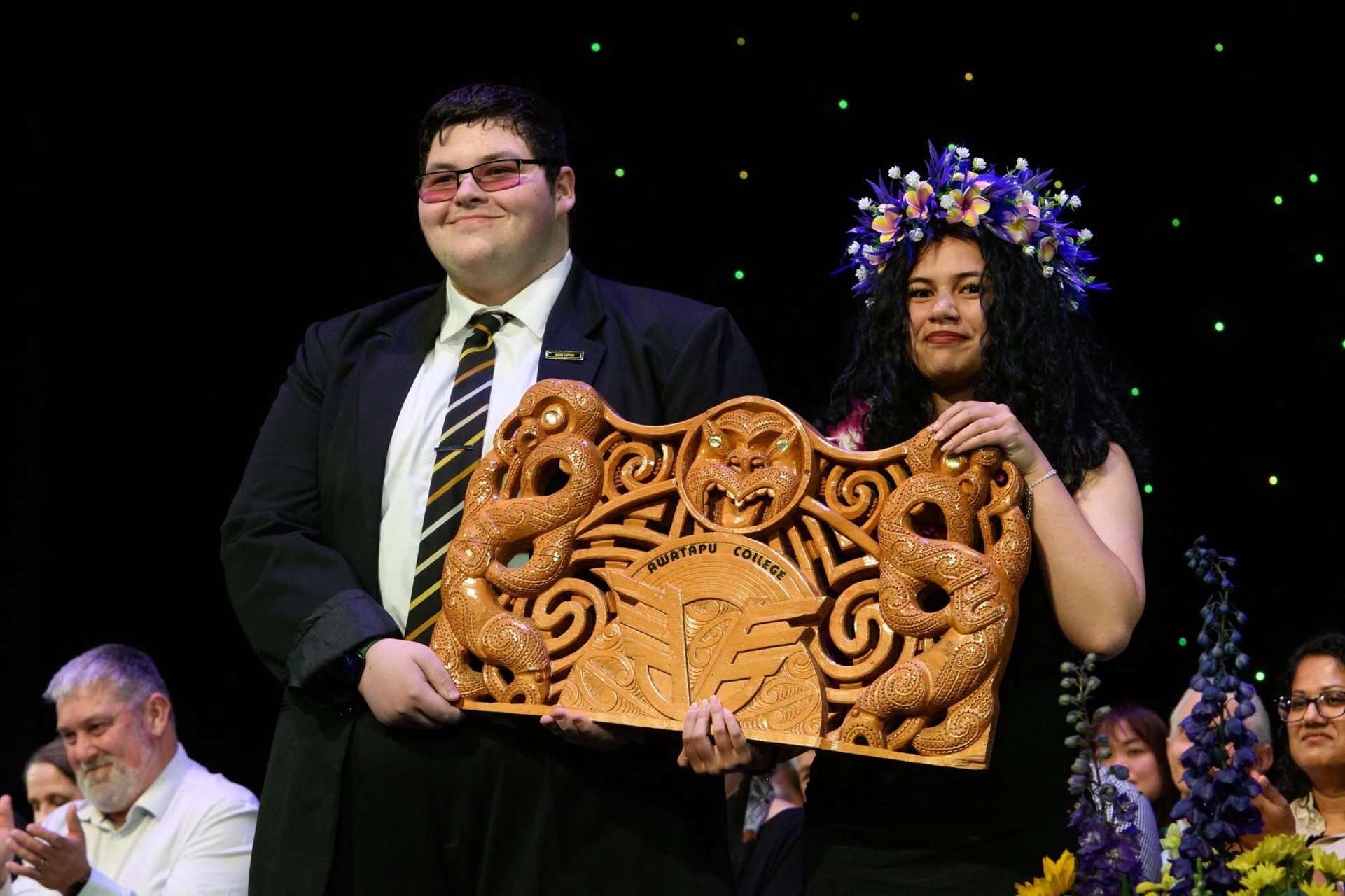
Me with the 2025 House Trophy
Then I discovered a new passion, something I did not know I could do: making websites.
At first, it was just about making websites function. Getting things to work. But over time, it became less about websites as pages and more about interfaces, motion, emotion, and user experience.
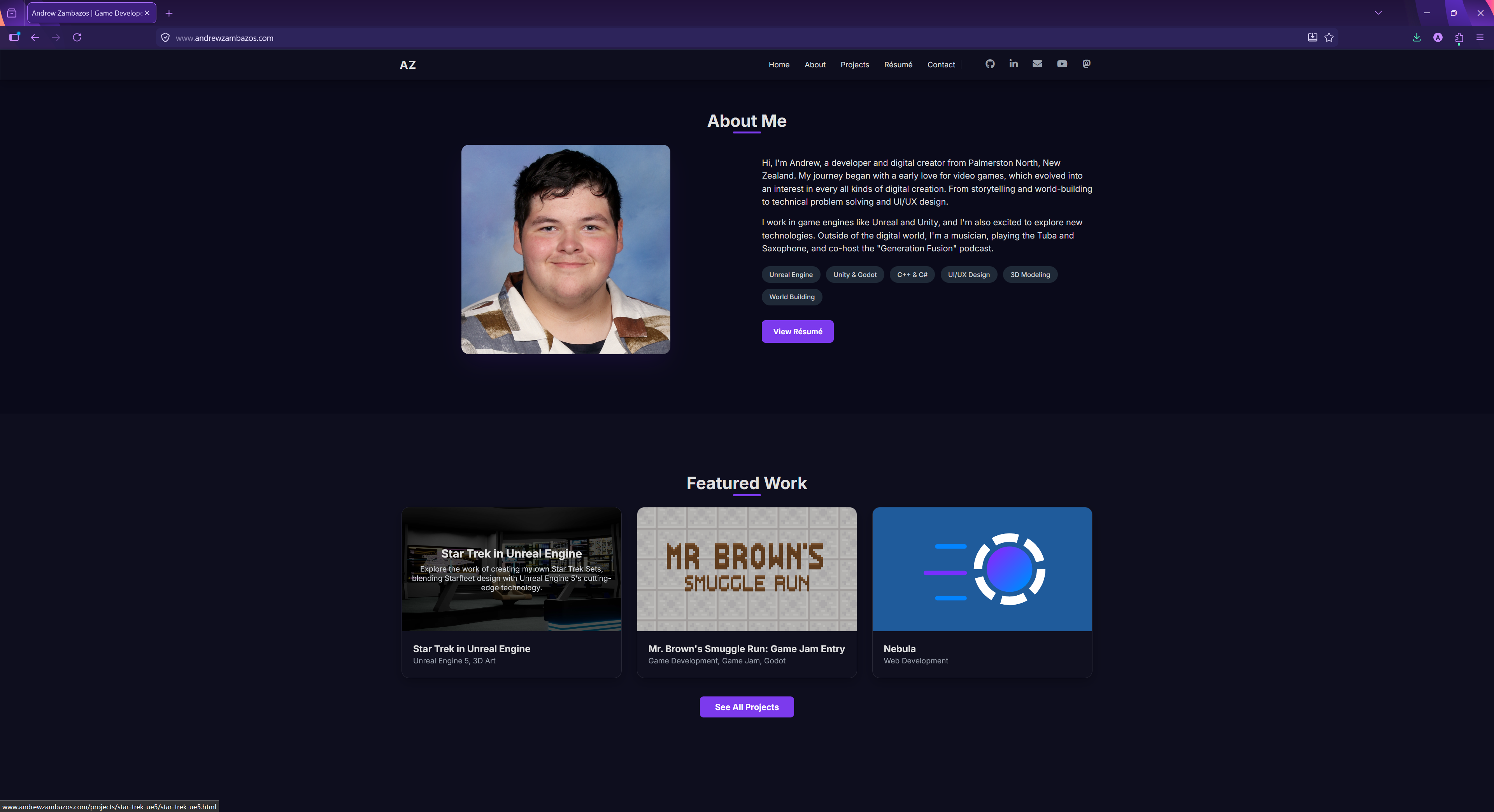
My portfolio, https://andrewzambazos.com
"I shifted from making websites for functionality
to making art with function."
I discovered that making websites, especially making them visually interesting and enjoyable to use, was art.
Slowly, my passion for games came back. It turned out I needed the break. When I returned to games, I came back with even more passion than before.
Part of what helped was having to decide my future. In my head, my options were to become a teacher or go into games. After visiting Massey's Wellington campus, I decided I wanted to study games. From that decision came a rush of passion and ideas, not only for games, but also for websites, software, design, and even building my own game engine.
Environment designer. Worldbuilder. One day, game director.
Interfaces, motion, digital experience. Art with function.
Photography, design, digital technology, and one day, lecturing.
Something else I decided is that I still want teaching to be part of my future. I have seen how much enjoyment my teachers and my mum get from teaching. I also realised that, much like one of the reasons I came to university, teaching would let me keep playing with cool tools, ideas, and software that I might not otherwise get to use.
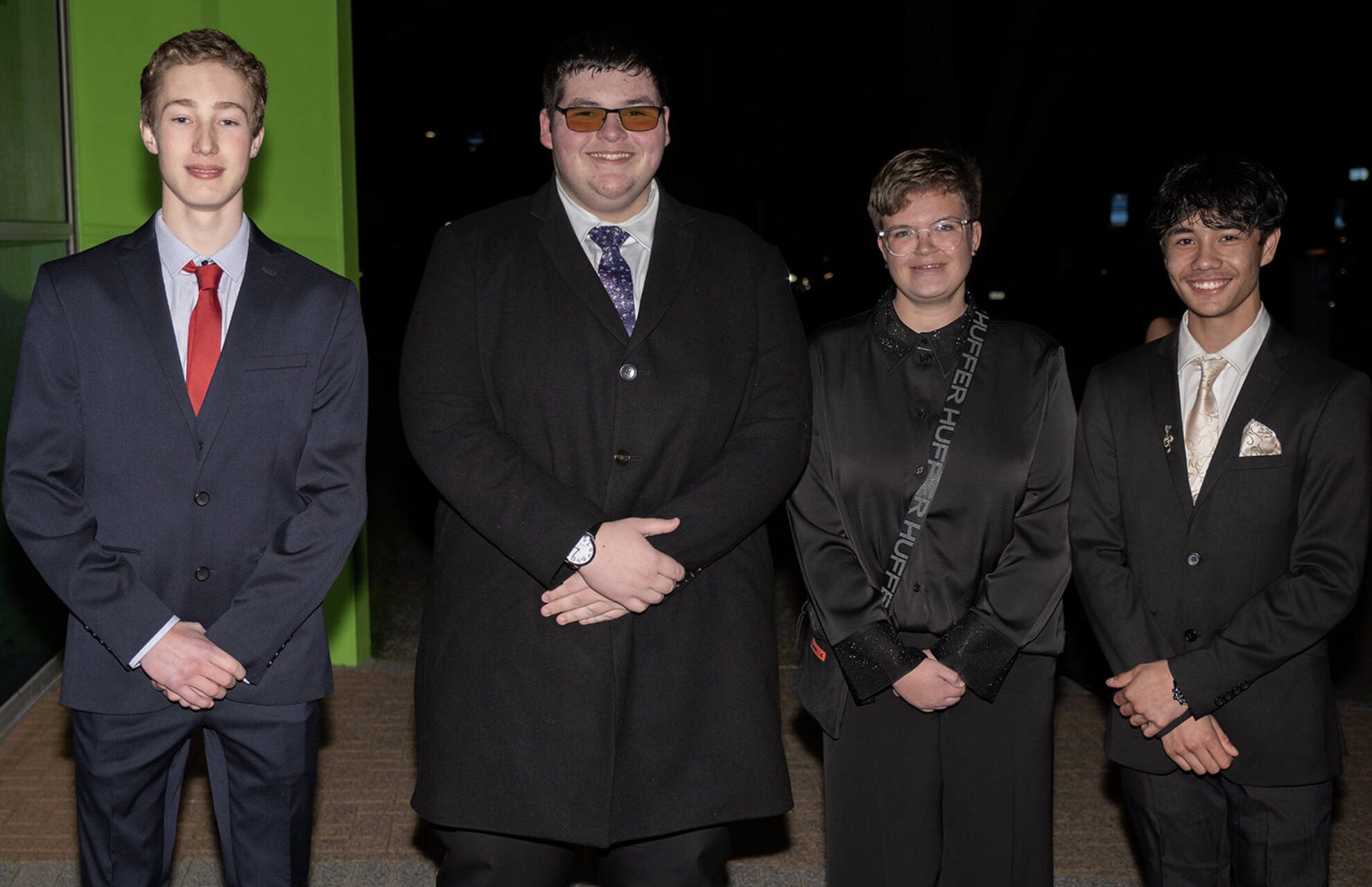
Me at my 2024 School Ball
I would love to work in the games industry. I still have the dream of working in a studio as an environment designer, and one day working my way up to game director. But I would also like to explore my other passions. I could see myself becoming a photography or design teacher, a digital technology teacher, or, my biggest aspiration, a lecturer who runs lectures and workshops at university.
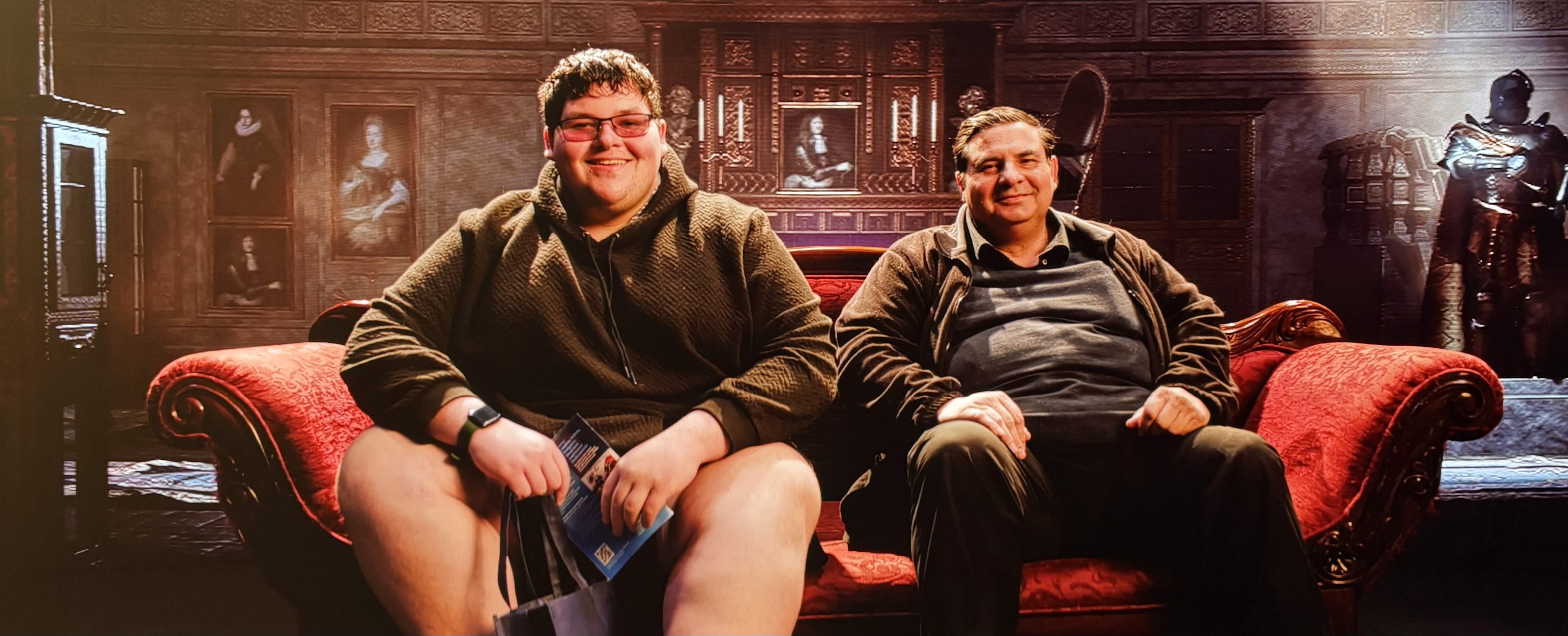
Massey University, Wellington
That is my story so far.
"I think, in a way, I am still that kid looking through the forcefield, wondering what is behind it. The difference is that now I have the tools to start building what is on the other side."
To learn more about me and my work, go to my portfolio at https://andrewzambazos.com.